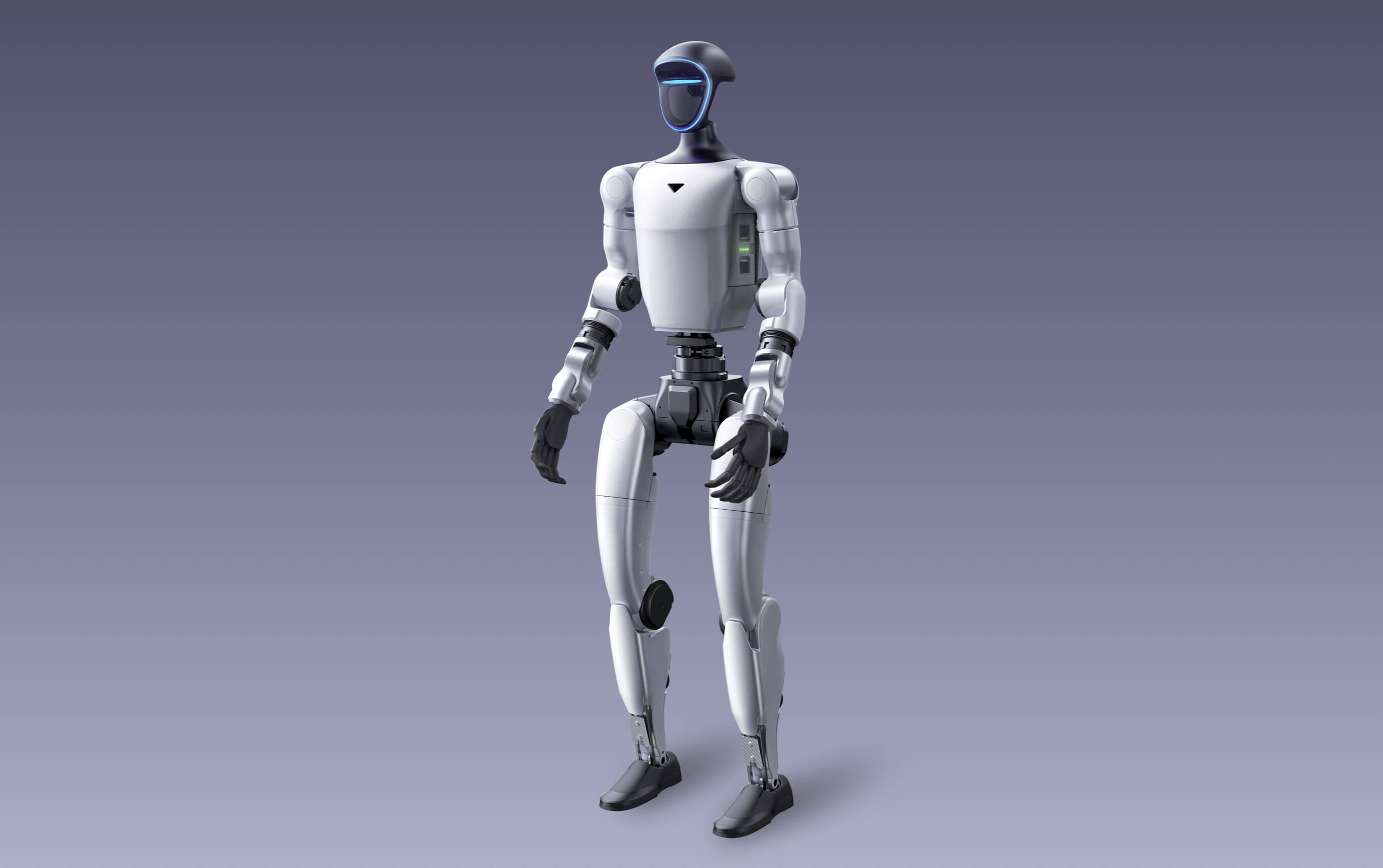
Boston Dynamics Drops the Pinky: Implications for Melbourne Humanoid Buyers
Today's headline story comes from The Robot Report, which reports that Boston Dynamics has unveiled a new hand design for its Atlas humanoid. Published on October 1, 2026, the article details a strategic pivot away from general-purpose grasping toward specialized tool manipulation.
The new hand features four fingers and 13 degrees of freedom (DOF), utilizing direct actuation with encapsulated joints to avoid fragile cables. Notably, it omits the pinky finger. According to Boston Dynamics engineers, the decision was driven by a trade-off analysis where the complexity and power consumption of an additional digit did not justify the marginal gain in dexterity for most tasks. The team conducted an experiment taping their own fingers together to determine that the 'additional dexterity and tasks you'd be able to accomplish is not worth the extra complexity.'
The report also describes Boston Dynamics’ Robotics Metaplant Application Center in Georgia as part of its industrial development work. The hand is designed for high-fidelity simulation, enabling sim-to-real reinforcement learning for tasks like sliding fingertips, dexterous pinches, and triggered tool grasps such as drills or welding torches.
Why the Pinky Was Dropped
The removal of the pinky finger represents a deliberate engineering choice rather than an oversight. Boston Dynamics' Alberto Rodriguez noted that there were no straight answers regarding thumb count or finger inclusion, relying instead on intuition and experimentation. The design prioritizes compactness and strength over mimicking human anatomy exactly.
Dylan Thrush, a mechanical engineer on the Atlas team, explained that while human-like hands offer a smaller cross-embodiment gap with human manipulation data, the size constraints of robot actuators are critical. A hand similar in size to a large human hand drives up actuator dimensions. By removing the pinky, Boston Dynamics maintained similar strength to previous versions while reducing bulk and power consumption.
The design philosophy centers on "backdrivability" and transparency, allowing the robot to rely on proprioception for agile behaviors. Dense pressure tactile sensors cover the fingertips and palm, enabling the detection of small contact signals essential for delicate manipulation without the need for a fifth digit.
The Shift from Grasping to Tool Use
The previous Atlas hand featured seven DOFs designed to grasp a large variety of objects. The new configuration focuses on manipulating those objects once grasped. This distinction is vital for industrial applications where precision tools are standard rather than loose items.
Key capabilities highlighted in the report include:
- Sliding the fingertip of the thumb along the length and width of other fingers.
- Dexterous pinch grasps between the thumb and any other finger.
- Dexterous tripodal grasps.
- Triggered tool grasps for power tools like drills, grinders, and welding torches.
This shift suggests that future humanoid deployments will require specific task definitions. A robot capable of holding a drill is different from one designed to pick up random household items. For buyers in manufacturing hubs, this means the value proposition depends heavily on the intended workflow.
Comparing with Unitree's Approach
While Boston Dynamics focuses on tool manipulation with four fingers, Unitree Robotics offers a different configuration that may appeal to other sectors. As noted in their product data, the Unitree G1 features an optional three-fingered dexterous hand (Dex3-1) with force control capabilities.
The Unitree G1 specifies 7 DOFs for its single hand, which is optional and can be equipped with tactile sensor arrays. Its design emphasizes extra-large joint movement space, with waist angles reaching Z±155° and hip rotation up to R+170°. The unitree G1 also highlights a combined force-position hybrid control system, described as sensitive and reliable for precise object operation.
In contrast to Boston Dynamics' explicit removal of the pinky due to complexity costs, Unitree offers an optional hand with force control. Both approaches aim to simulate human hands but differ in their default configurations and underlying control philosophies. Boston Dynamics emphasizes direct actuation and simulation learning, while Unitree highlights its UnifoLM (Unified Robot Large Model) for accelerating intelligence.
Practical Implications for Melbourne Buyers
For robotics teams operating in Melbourne or the Narre Warren region, this news underscores the importance of verifying exact configurations before purchasing. The Boston Dynamics update does not confirm stock availability locally, nor does it imply approval for use in Victoria's industrial settings.
Buyers must distinguish between demonstrated capability and commercial readiness. A hand designed to grasp a tool is not automatically ready for deployment in a Narre Warren factory without a task-specific safety assessment.
Key verification points for any supplier include:
- Exact Configuration: Confirming DOF counts, actuator types, and sensor placement.
- Intended Task: Ensuring the robot's capabilities match specific job requirements (e.g., tool use vs. general grasping).
- Local Delivery: Checking logistics for heavy units to SE Melbourne sites.
- Operator Training: Availability of programs for working with high-dexterity systems.
- Safety Assessment: Reviewing relevant Victorian plant safety duties for the intended workplace.
The Role of Sensing Technology
Accurate physical feedback remains crucial as humanoid robots move from research labs into shared spaces. While Boston Dynamics focuses on hand design, the broader industry relies on precise sensing for balance and interaction.
Vishay Precision Group (VPG) is set to showcase custom sensing solutions at RoboBusiness 2026, emphasizing that force and torque sensing determine how safely robots interact with their environment. Standard off-the-shelf sensors often lack the thermal stability or multi-axis measurement needed for compact robotic joints.
Custom strain gage-based solutions can be built directly into robot structures to measure joint torque, foot pressure, and contact pressure in real time. This data is essential for controlling balance, coordinated movement, and safe human interaction, addressing challenges that standard catalog sensors cannot solve due to size or noise issues.
Scoping a Local Pilot Project
To scope a local pilot effectively, a robotics team should begin by defining the specific manipulation tasks required. Is the goal to operate power tools, handle small components, or assist with material handling?
- Define the Task: List specific objects and tools the robot must interact with.
- Assess Environment: Determine if the workspace is controlled (like a factory floor) or dynamic (like a warehouse).
- Evaluate Safety: Review WorkSafe Victoria’s plant guidance and complete a task-specific risk assessment before deployment.
- Select Configuration: Choose between options like Boston Dynamics' four-fingered design or Unitree's optional force-controlled hand based on task needs.
- Verify Support: Ensure the supplier provides local delivery, training, and post-deployment support.
Next Steps for Prospective Buyers
The evolution of robotic hands signals a maturing industry where specific applications drive hardware design. For those researching humanoid robots in Australia, it is critical to avoid assumptions about stock or safety approvals based on overseas news.
To explore the Unitree range offered through an Australian ordering pathway, visitors should Explore humanoid robots in Australia. This resource provides context on what is currently accessible within the Australian market without making specific claims about inventory levels.
For organizations ready to move forward with procurement, the most direct path is to Request a robot quote. Here, teams can discuss their specific requirements, including configuration details and intended use cases, ensuring they receive accurate pricing and delivery timelines tailored to their location in Melbourne or Narre Warren.
Frequently asked questions
Is the new Atlas hand available in Melbourne?
The cited report does not establish local availability. Ask Boston Dynamics about Atlas sales and deployment terms; the KproApps quote pathway on this site covers the Unitree range.
How should Unitree and Atlas hand designs be compared?
Compare the exact hand configuration, required tasks, development access and evidence from a controlled trial. A feature list alone cannot establish which system suits a project.
What safety guidance applies to humanoid trials in Victoria?
WorkSafe Victoria provides plant safety guidance. A workplace should assess its specific robot, task, environment and people before a supervised trial.
Sources and further reading
- Boston Dynamics drops pinkie on new humanoid hand — The Robot Report (2026-10-01)
- Precision In Motion. Vishay Precision Group, Inc. (VPG) to Showcase Custom Sensing Capabilities for Humanoid Robotics at RoboBusiness 2026 — The Robot Report (2026-10-01)
- Unitree G1 humanoid robot — Unitree Robotics
- Plant safety guidance — WorkSafe Victoria
Specifications, configurations, availability and manufacturer terms can change. Confirm the current product configuration and written quotation before ordering.