Humanoid Receptionists in Melbourne: Lessons from HALO Research for Narre Warren Buyers
Today in Sydney, researchers at the University of Texas at Arlington and Carnegie Mellon University published findings on how humanoid robots can coordinate with human partners during physically coupled tasks. The HALO project, detailed in an ICML 2026 oral presentation, demonstrates a Unitree G1 carrying a tire alongside a human partner. This breakthrough in shared pushing and carrying offers a tangible blueprint for integrating bipedal robots into reception workflows across Melbourne and Narre Warren.
While the HALO team focuses on mathematical stability for transport through confined spaces, the implications for local businesses are significant: a robot that can safely adjust to a human's unpredictable movements is essential for safe deployment in public-facing roles. For buyers in the Melbourne region, this research highlights that commercial readiness requires more than just hardware; it demands rigorous coordination training and safety protocols.
The HALO Breakthrough: Coordination Over Certainty
The HALO project tackles the difficulty of independently learning agents undermining shared objectives. In their experiments, a human partner and a Unitree G1 successfully transported a tire through confined spaces, achieving an average time of 76.2 seconds compared to over two minutes for scripted baselines. Crucially, the system reduced post-halt drift when partners changed height or were obstructed.
This research is not yet a commercial product guarantee. The authors note that real-robot results are promising but limited by motion-capture support and a small number of trials. For a Melbourne buyer, this distinction is vital: a robot capable of carrying a tire in a lab does not automatically mean it can manage a reception desk or luggage cart without additional configuration.
From Lab Bench to Reception Desk
The practical application of HALO's findings lies in "physically coupled" tasks. In a reception environment, this translates to handing over documents, managing queues, or assisting with physical objects like mailboxes or display props. The research demonstrates that policies must be adjusted to reduce disagreement when the human partner behaves unpredictably.
For Narre Warren businesses considering a humanoid assistant, the lesson is clear: coordination training is as critical as hardware selection. A robot that cannot adapt to a receptionist's sudden stop or crouch will fail in its intended task, regardless of its motor specifications.
Unitree G1 Specifications and Market Context
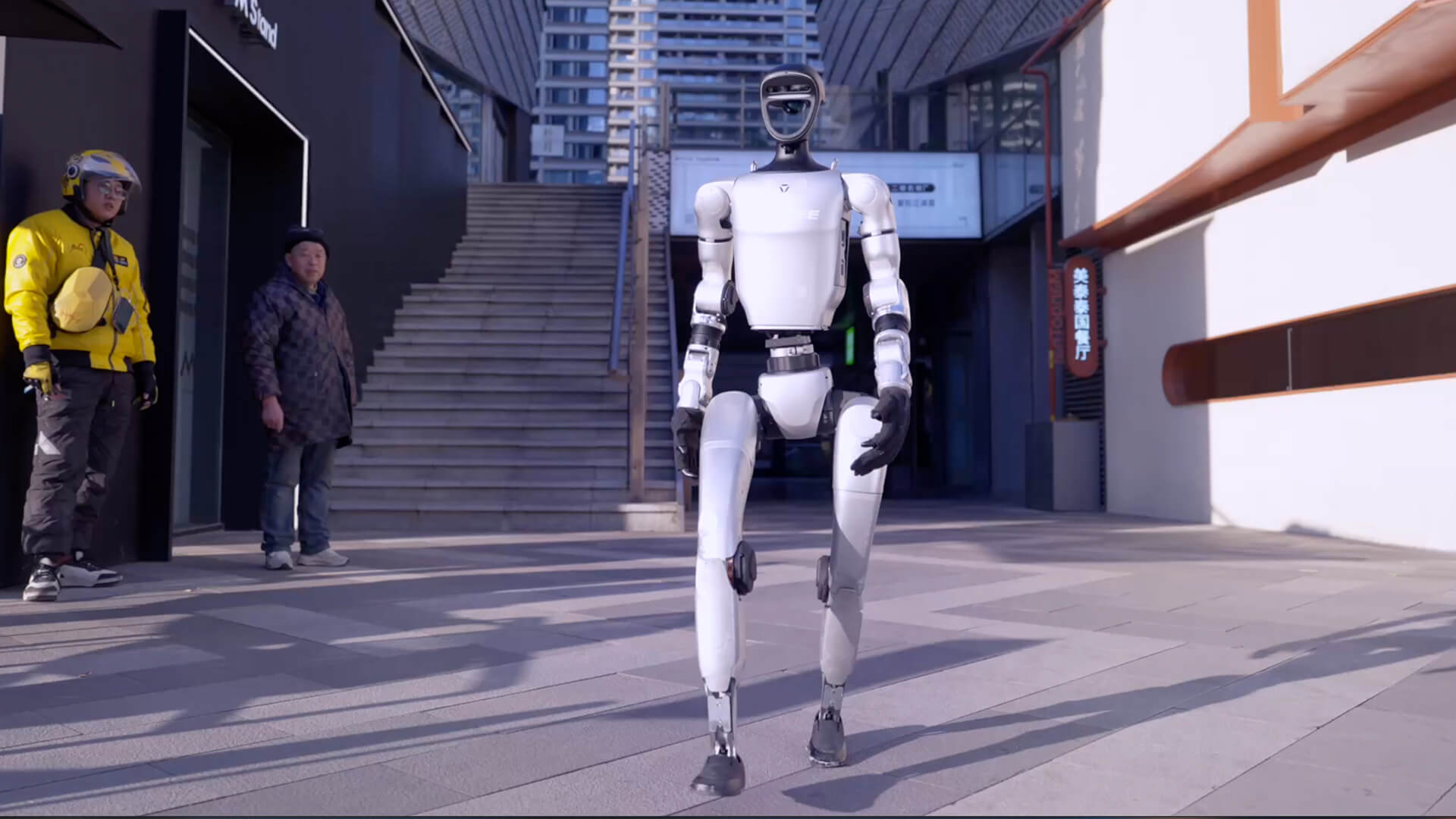
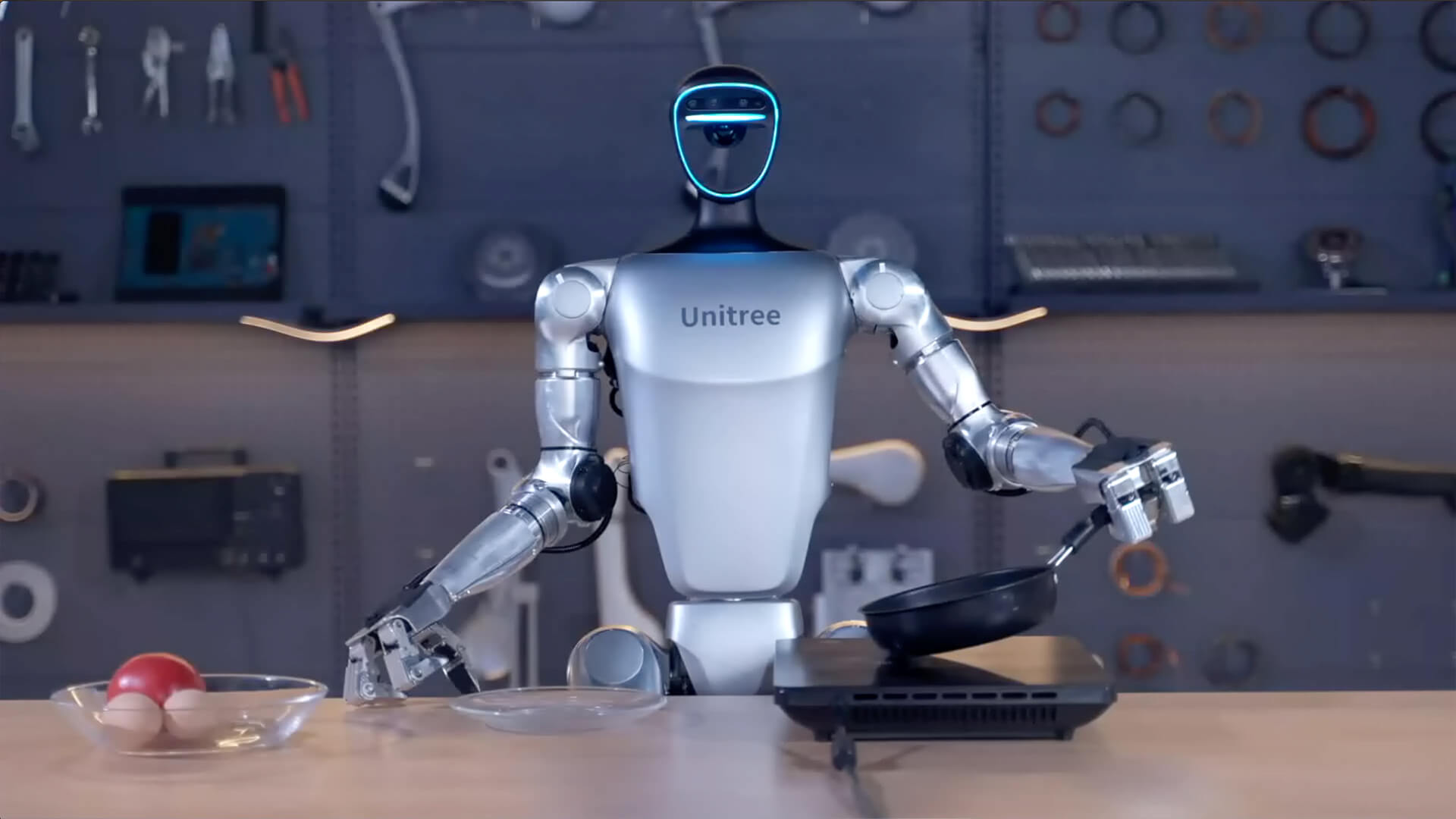
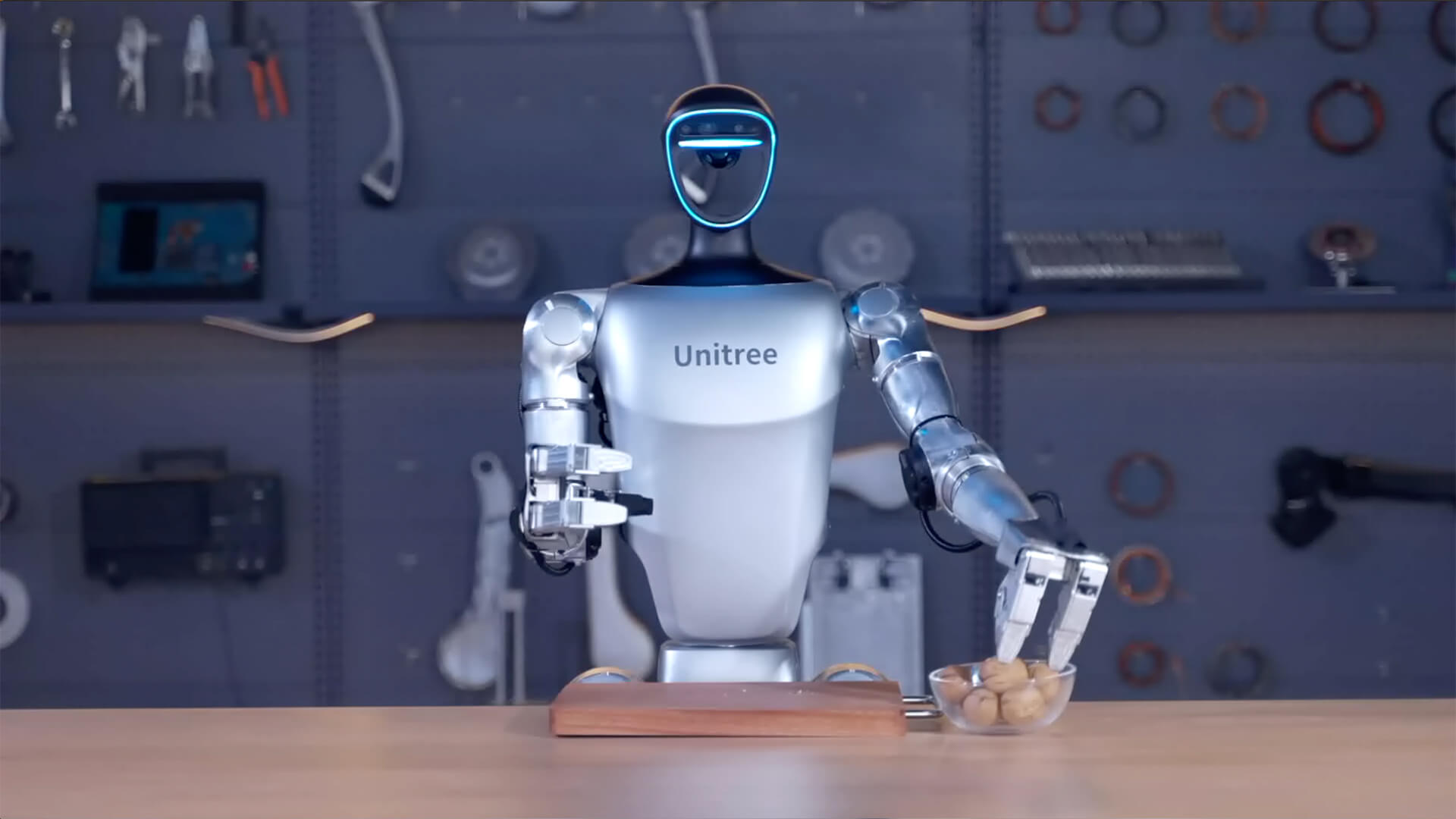
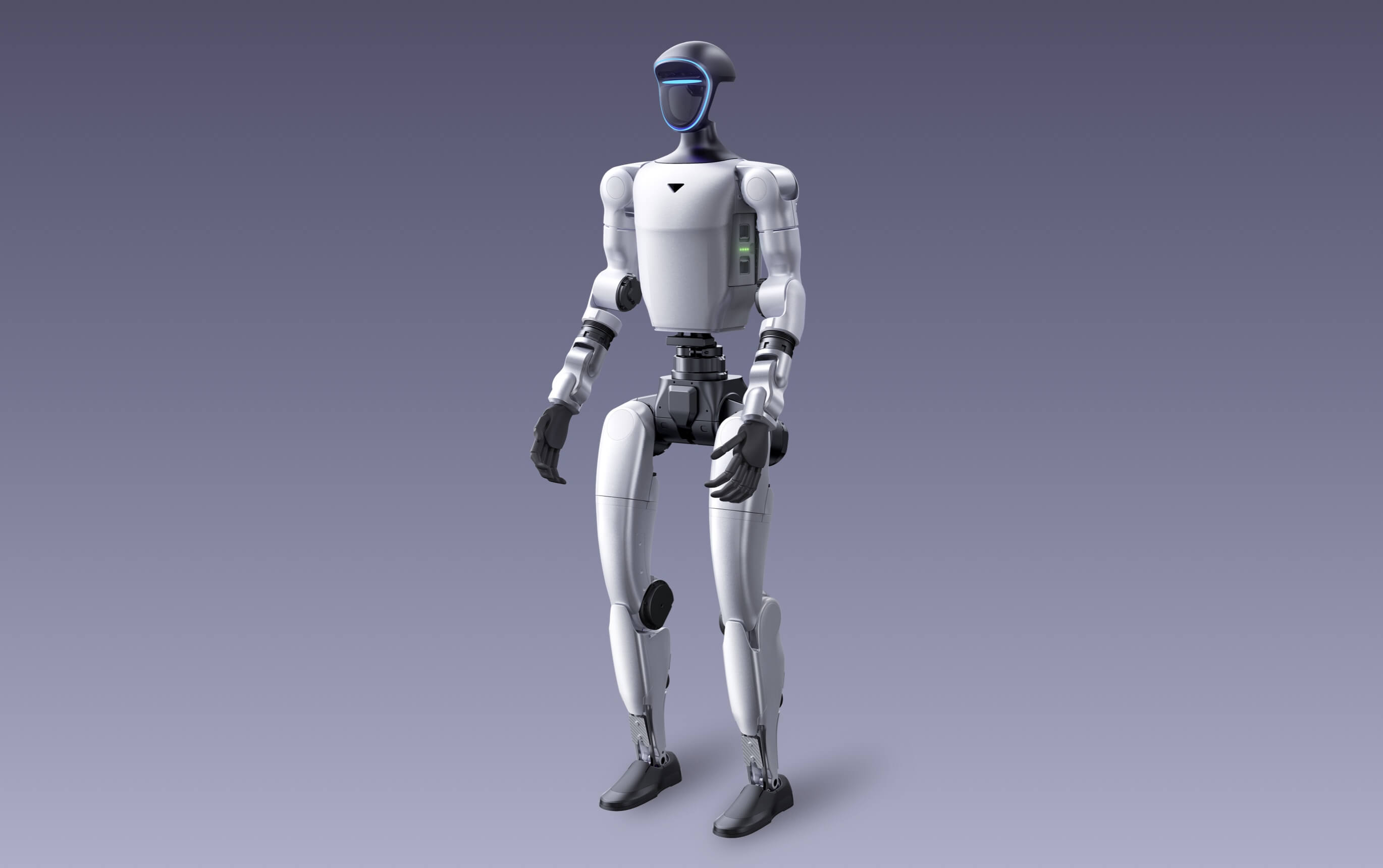
The Unitree G1, frequently featured in recent demonstrations, serves as a primary example of the hardware class being explored. According to Unitree Robotics, the G1 features 23 to 43 joint motors, a weight of approximately 35kg with battery, and force-control dexterous hands.
Key specifications relevant to reception work include:
- Joint Freedom: 23 total degrees of freedom, allowing for complex manipulation.
- Dex3-1 Hand: Optional three-fingered dexterous hand with tactile sensors.
- Mobility: Foldable dimensions (690x450x300mm) and a height of 1320mm when standing.
- Control: Continuous OTA software upgrades and AI-driven imitation learning.
While the G1 is marketed as having "extra large joint movement angle space," buyers must verify if these capabilities are sufficient for their specific reception tasks. The manufacturer highlights its ability to simulate human hands, but this remains a capability claim that requires independent verification before purchase.
Safety and Regulatory Considerations in Victoria
In Victoria, the deployment of plant and machinery is governed by strict safety standards. WorkSafe Victoria recently issued alerts regarding forklift incidents and quad bike dangers, emphasizing the need to assess risks on unstable surfaces and slopes.
For a humanoid receptionist, these guidelines translate to:
- Risk Assessment: Evaluating the robot's interaction with humans in high-traffic areas.
- Physical Safety: Ensuring the robot does not tip over or cause injury during physical tasks like carrying objects.
- Compliance: Verifying that the robot meets Australian standards for plant and machinery, distinct from general consumer electronics.
The HALO project explicitly distinguishes its mathematical stability results from "methods that constrain physical trajectories for safety." Buyers must ensure their supplier provides a comprehensive safety assessment specific to the Australian context, rather than relying solely on lab-tested algorithms.
Defining Your Pilot Scope
To determine if a humanoid robot fits your business model, start by scoping a local pilot with clear boundaries. A successful pilot should focus on a single, well-defined task where human-robot coordination is critical, such as retrieving items from a cart or assisting with physical greetings.
Key steps for scoping:
- Task Definition: Identify a specific physical interaction the robot must perform safely alongside staff.
- Environment Setup: Replicate the reception area's lighting and traffic patterns in the test zone.
- Human Fallback: Establish clear protocols for when the robot fails or encounters an unexpected human behavior.
- Data Collection: Measure success rates, specifically focusing on coordination failures rather than just operational uptime.
This approach mirrors the HALO team's method of testing confined-space transport before claiming broader reliability.
Verifying Capabilities with Your Supplier
When sourcing a humanoid robot for Melbourne or Narre Warren operations, buyers must move beyond marketing claims. The following verification points are essential:
- Exact Configuration: Confirm the specific model (e.g., Unitree G1) and optional modules like force-control hands or additional waist degrees of freedom.
- Intended Task Validation: Ask the supplier to demonstrate the robot performing your specific task, not just general walking or grasping.
- Local Delivery and Support: Ensure there is a support team available in Victoria for maintenance and software updates.
- Operator Training: Verify that training programs are provided to staff on how to interact safely with the robot.
- Safety Assessment: Request an independent safety audit tailored to Australian regulations, not just manufacturer documentation.
- Total Landed Cost: Obtain a detailed quote including hardware, shipping, installation, and ongoing service fees.
Commercial Readiness vs. Research Demonstrations
It is crucial to distinguish between research demonstrations and commercial readiness. The HALO project represents a significant step forward in AI coordination, but it does not guarantee that the technology is ready for widespread adoption.
Similarly, while Unitree Robotics markets the G1 with impressive specs, these are manufacturer claims. Buyers should treat such pages as informational guides rather than proof of local availability or safety approval. The same caution applies to social robots like Pepper, which focuses on digital interaction and conversation rather than physical manipulation.
For a receptionist role, the distinction matters: a robot that can chat but cannot safely handle an object is less useful than one that can do both. Buyers should prioritize suppliers who can provide proof of concept in their local environment.
The Path Forward for Melbourne Businesses
The convergence of advanced AI and humanoid robotics presents new opportunities for businesses in the Melbourne and Narre Warren regions. By learning from research like HALO and understanding the regulatory landscape through WorkSafe Victoria, companies can make informed decisions about integrating physical assistants into their operations.
The next step is to engage directly with suppliers who can offer transparent, itemized quotes. Whether you are interested in a bipedal unit for logistics or a social robot for customer engagement, clarity on costs and capabilities is paramount.
For more information on humanoid robots available in Australia, please Explore humanoid robots in Australia. To request a tailored quote and discuss your specific use case, Request a robot quote.
KproApps is based in Narre Warren and welcomes enquiries from Melbourne and south-east Melbourne. We invite readers to contact KproApps about their intended use and explore the website for further details on our offerings and support network.
Related Resources
- HALO Research: Humanoids Daily - HALO Teaches Humanoids to Coordinate With Human Partners
- Unitree G1 Specs: Unitree Robotics - Unitree G1 humanoid robot
- WorkSafe Victoria Plant Safety: WorkSafe Victoria - Plant safety guidance
Next Steps
Ready to evaluate a humanoid robot for your business? Visit our shop to Request a robot quote and get started on your pilot today.
Frequently asked questions
Can I use HALO research results to claim my robot is safe for public use?
No. HALO's mathematical stability results are research findings, not safety certifications. You must verify compliance with WorkSafe Victoria and request an independent safety assessment for your specific deployment.
Is the Unitree G1 available for immediate purchase in Melbourne?
Availability varies by supplier. The Unitree G1 is a real product, but you should contact local distributors for exact stock, pricing, and delivery timelines rather than assuming availability.
What is the difference between a research demo and a commercial robot?
Research demos, like HALO's tire-carrying test, show potential in controlled environments. Commercial robots require verified safety, operator training, and support agreements suitable for daily business operations.
Sources and further reading
- HALO Teaches Humanoids to Coordinate With Human Partners During Shared Carrying Tasks — Humanoids Daily (2026-10-30)
- Video Friday: Robot Decommissioning Takes a Fun Turn — IEEE Spectrum (2026-10-09)
- Unitree G1 humanoid robot — Unitree Robotics
- Plant safety guidance — WorkSafe Victoria
- Pepper social robot — SoftBank Robotics America
Specifications, configurations, availability and manufacturer terms can change. Confirm the current product configuration and written quotation before ordering.